Grit and Rock Salt
Roads are often treated with grit or salt, which can irritate paws or cause illness if licked. Rinse paws with warm water after winter walks.
Antifreeze
This common winter chemical is highly toxic to dogs, even in tiny amounts, so make sure to store safely and clean spills immediately.
Freezing Temperatures
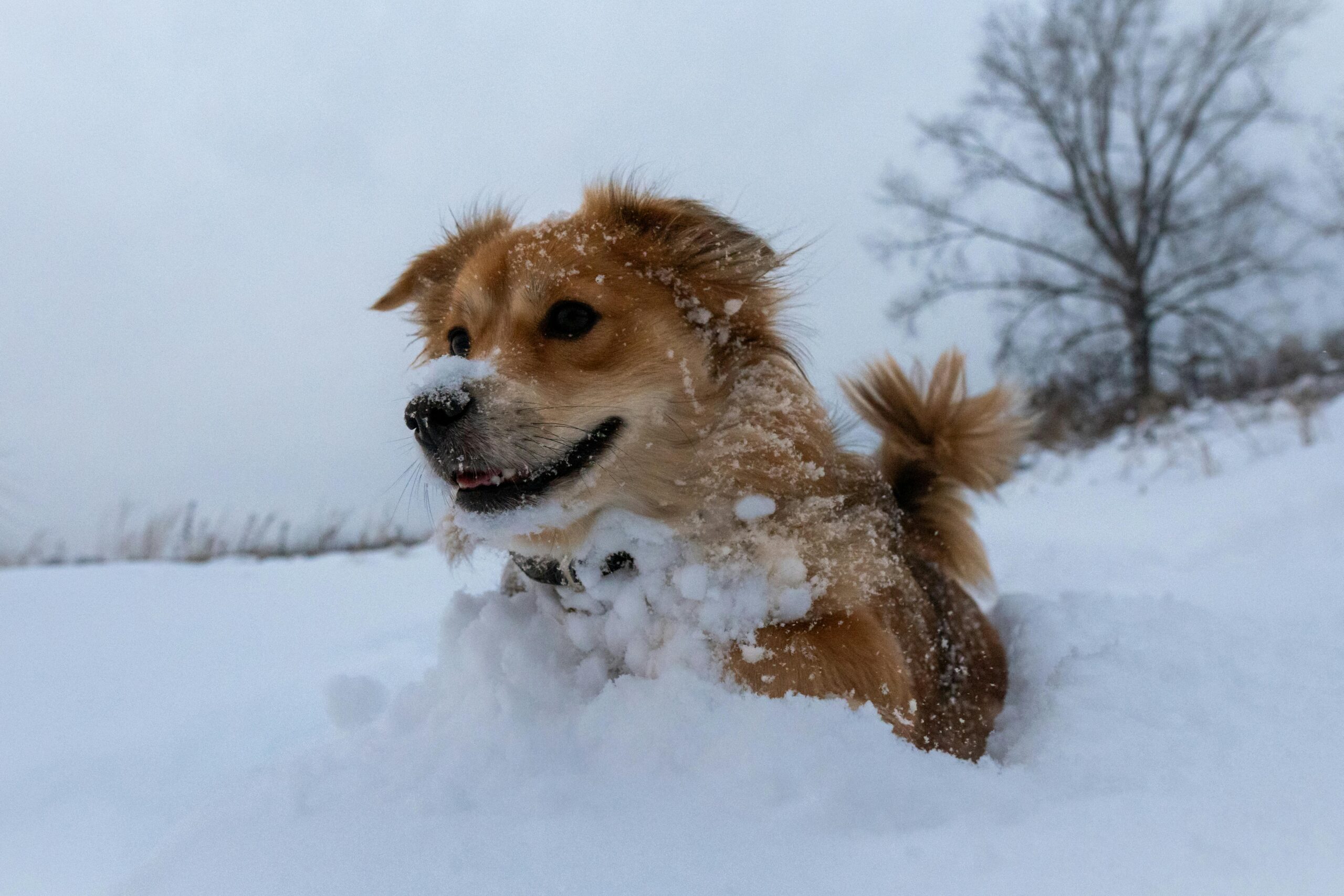
Puppies, older dogs, and breeds with thin coats are especially vulnerable to hypothermia. Limit time outside and use coats for extra warmth.
Frozen Lakes and Ponds
Thin ice is dangerous, make sure to keep dogs on a lead near frozen water to avoid accidents.
Dark Nights
Short days mean more walks in the dark. Reflective gear helps keep dogs safe and visible.
Festive Foods
Chocolate, mince pies, grapes, and onions are all toxic to dogs. Keep holiday treats out of reach and make sure guests know to do so too.
Fireworks
Festive celebrations such as New Years Eve often bring fireworks, which many dogs find distressing. Provide a calm, secure space, use background noise, and ensure contact details on microchips and ID tags are up to date.
With awareness and preparation, winter can be a joyful season for both you and your dog.